
An Essential Lifeline: Water in Humanitarian Crises
Safe water saves lives in humanitarian crises. When it fails, everything else unravels.
Water is fundamental to human survival on every level: for drinking, cooking, and preventing disease. Without access to safe water, malnutrition worsens, hygiene conditions deteriorate, and people’s vulnerability increases exponentially.
As the European Civil Protection and Humanitarian Aid Operations (ECHO) notes, this creates a powerful paradox in humanitarian emergencies. Water can trigger disasters, yet it is essential to every response. Contaminated water spreads deadly disease, while clean water and basic hygiene can stop outbreaks. It can fuel conflict or create opportunities for cooperation. And although water itself is free, making it safe – treating it, storing it and distributing it – requires significant resources.
In 2025, over 300 million people are in need of humanitarian aid and around 2.1 billion people – a quarter of the global population – still lack access to safely managed drinking water. In fragile contexts, where economic, environmental, political, security and social risks are high and coping capacities are low, this access is 38% lower than in more stable countries.
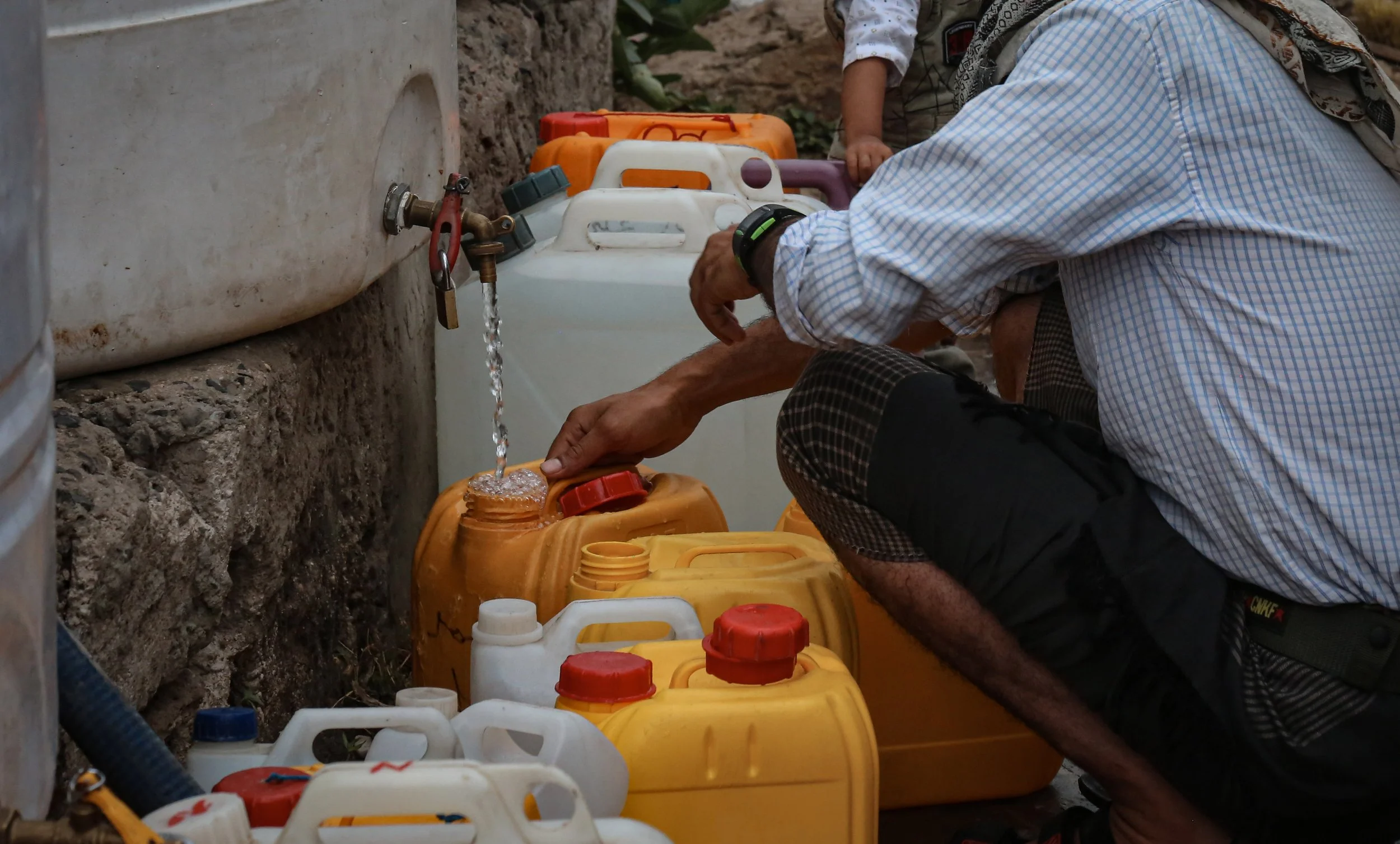
In the city of Taiz, in Yemen, more than 600,000 people face a severe water crisis brought on by conflict and low seasonal rainfall.
Emergency response typically begins with one focus: the delivery of safe water. Humanitarian organisations know that the clock starts ticking as soon as an emergency hits. But delivering it in complex environments is never simple, as each setting brings unique challenges like security constraints, fragile infrastructure, extreme weather and rapid population movement.
The importance of WASH
In any response involving water in humanitarian crises, WASH is one of the first priorities. Water, Sanitation and Hygiene (WASH) focuses on ensuring safe access to clean water and adequate sanitation – including water supply and storage, handwashing, washing facilities and waste management. In humanitarian crises, WASH is a core public health intervention because affected communities face heightened vulnerability to disease.
According to the International Committee of the Red Cross, access to water is now one of the main humanitarian concerns. For instance, more than ten years of conflict in Syria has seriously damaged the water-supply network, reducing supply by between 30 and 40 per cent.
Outbreaks linked to unsafe water and poor sanitation can be devastating: waterborne pathogens such as cholera and Shigella caused 85% of the 50,000 deaths following the 1994 influx of Rwandan refugees into the DRC, and Yemen’s 2016 cholera outbreak became one of the worst in modern history.
According to the WHO, people require at least 15 litres of water per day in emergencies – ideally 20 litres to maintain basic hygiene. The Sphere Handbook reinforces, however, that providing water alone is not enough; systems must be maintained, hygiene promoted and safe sanitation ensured to protect public health in the long run.
"Providing clean water alone is not enough; systems must be maintained and safe sanitation ensured to protect public health in the long run.”
Why water systems fail in crises
In humanitarian crises, water systems are often among the first to fail. Conflict or natural disasters can destroy wells, pipelines and pumping stations, forcing communities to rely on unsafe sources that are distant, insufficient, or contaminated.
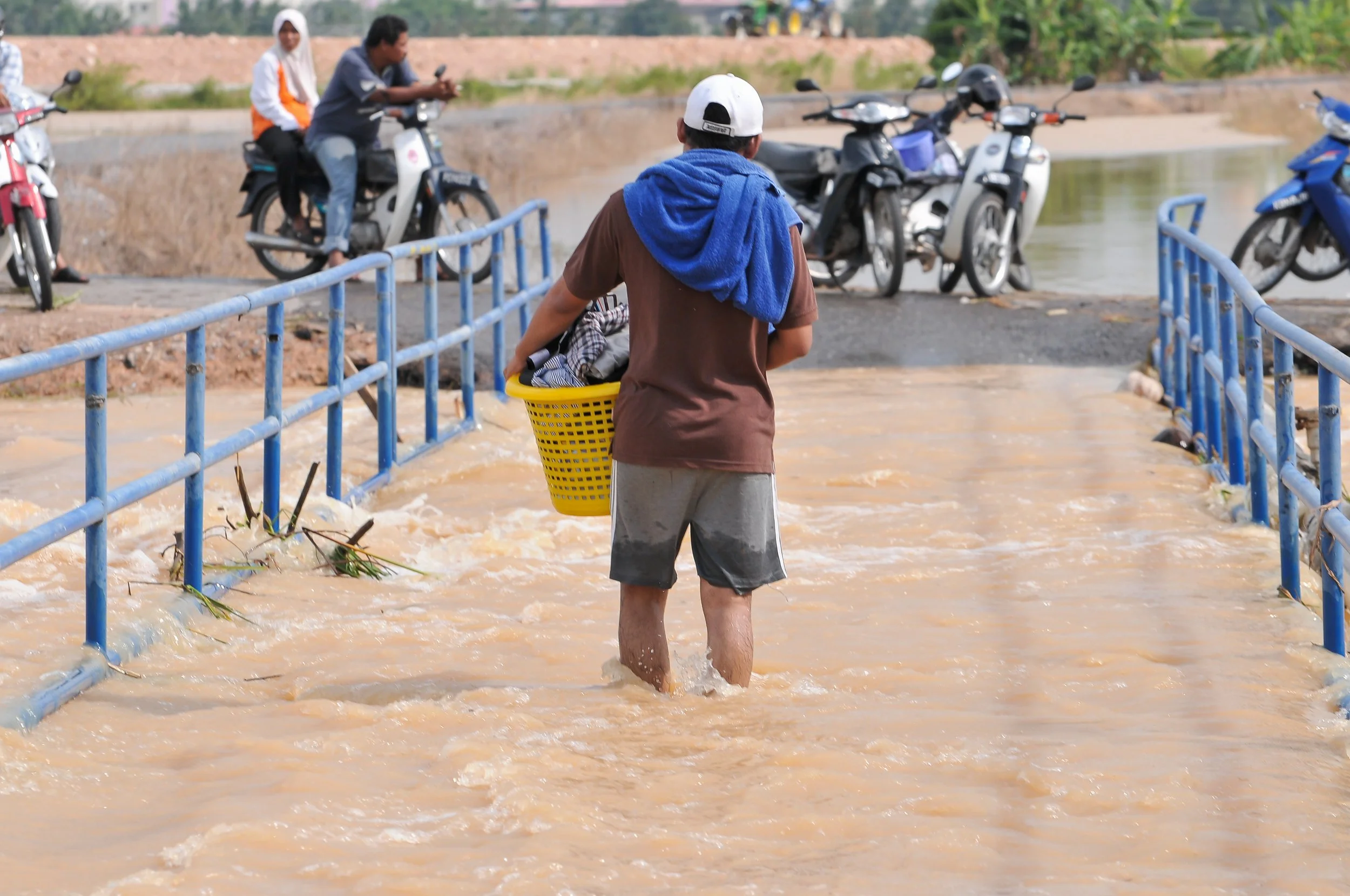
When vulnerable regions face sudden crises, water is one of the first points of impact. Natural disasters and conflict can lead to the contamination or degradation of safe water sources.
Rapid displacement can also overwhelm existing infrastructure, as refugee camps swell from thousands to tens of thousands of people in short periods. Environmental pressures like drought and heat further strain already fragile water supplies. In turn, sanitation breakdowns accelerate contamination and outbreaks such as cholera and hepatitis E.
Combined, these pressures demand emergency water solutions that are robust, rapidly deployable and resilient to volatile conditions.
Solutions to humanitarian water emergencies
Solving humanitarian water crises requires a multi-faceted approach that combines immediate relief, long-term infrastructure development and community empowerment.
In the short term, bottled water may need to be distributed or clean water transported by tanker truck to distribution points to meet immediate needs. However, tanker systems and bottled water can prove expensive, impractical and unsustainable in a crisis.
Addressing WASH emergencies requires longer term interventions and these quickly become complex. Research emphasises that WASH responses in humanitarian crises must adapt to evolving conditions – like rapid onset disasters to protracted conflicts – and that systems must be resilient, flexible and context-appropriate.
Here, rapidly deployable and mobile solutions like Chelsea Water’s Chelsea Mini Series and Trailered Purification Plants can deliver a quick and reliable water supply in challenging environments. These mobile units are plug-and-play solutions that work as soon as they’re connected to a power source, which can be mains or solar panels. The Chelsea Mini can produce up to 1,000 litres of WHO-standard water a day, while the Trailered Purification Plant is a mobile unit that produces 72,000 litres of WHO-standard water per day.
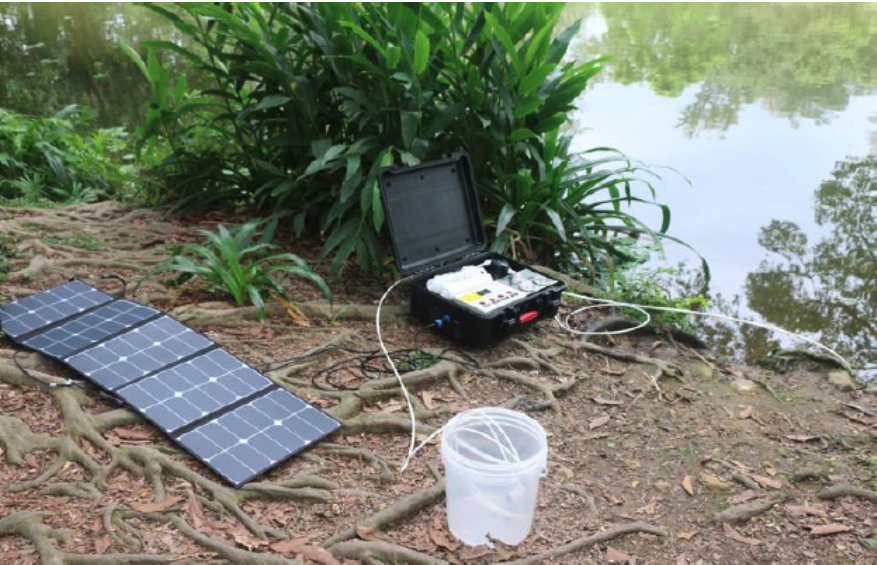
Small, mobile units are ideal for crisis-situations, where speed and power make all the difference.
Ensuring safe water
Key to longer-term resilience in water systems during conflicts and natural disasters is effective partnership between private sector companies like Chelsea Water, local authorities and humanitarian networks. The prioritisation of this can ensure that water-supply networks remain resilient.
By combining innovative technology, local expertise, and strong humanitarian partnerships, these solutions protect lives, support public health, and strengthen communities. Above all, improving access to water in humanitarian crises helps restore a sense of safety in places where uncertainty is constant. Strengthening these systems also gives humanitarian teams a far better chance of preventing disease and protecting lives.
